
Cloud Cost Mangement Key Elements - Overview.png
 

Successful cloud cost management has four key elements

There’s a fundamental difference between cost optimization and cost reduction.

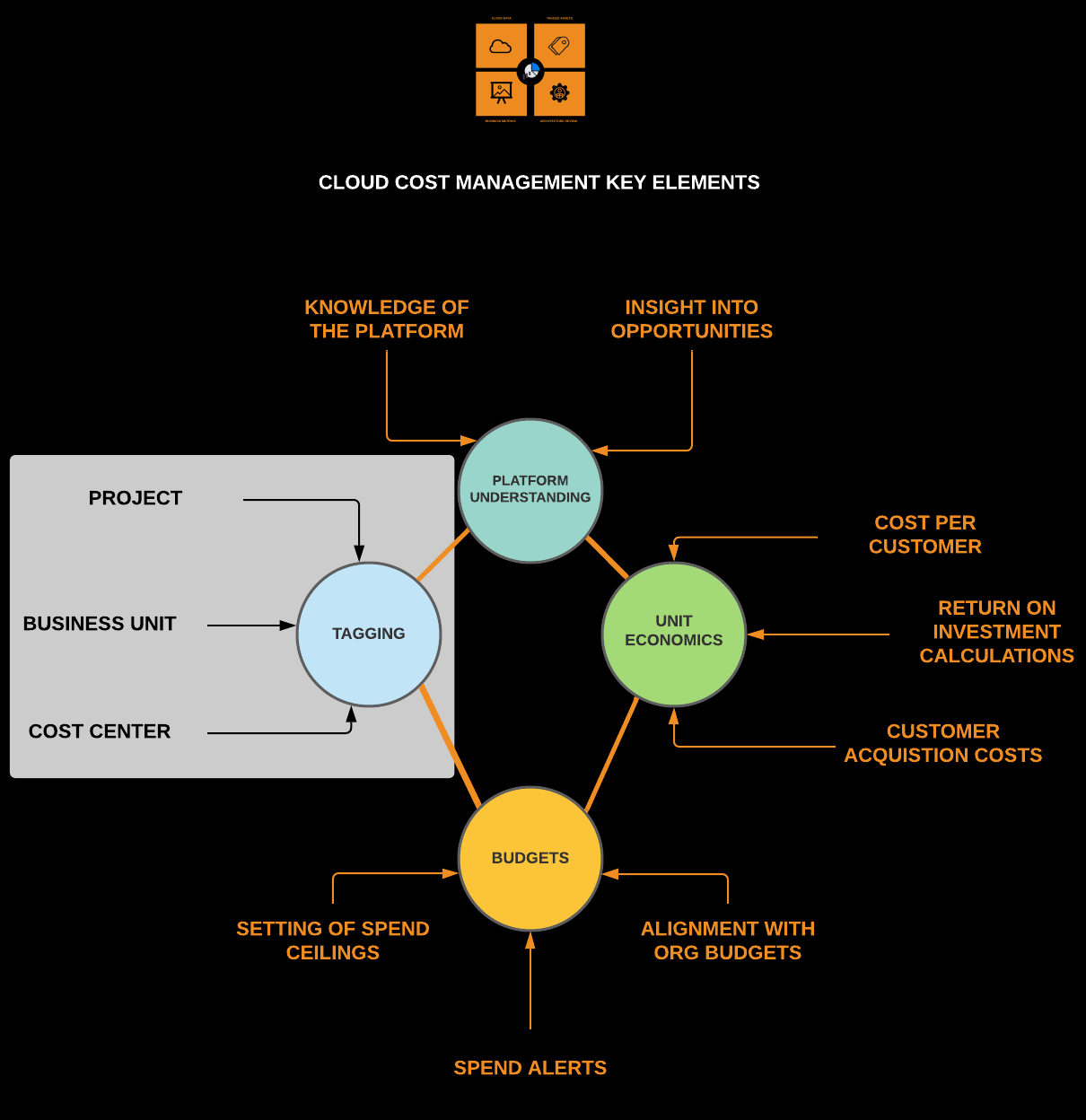
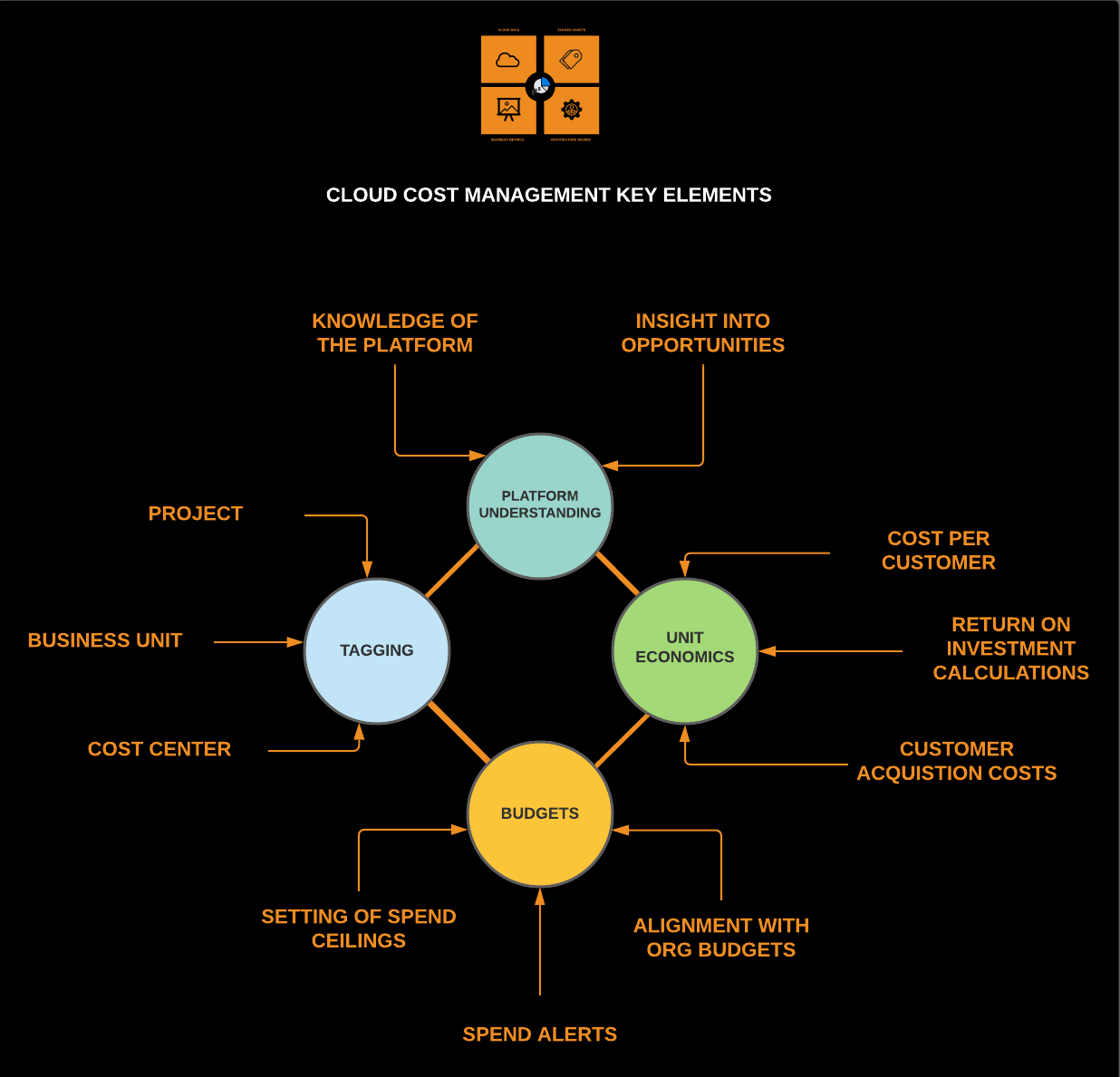
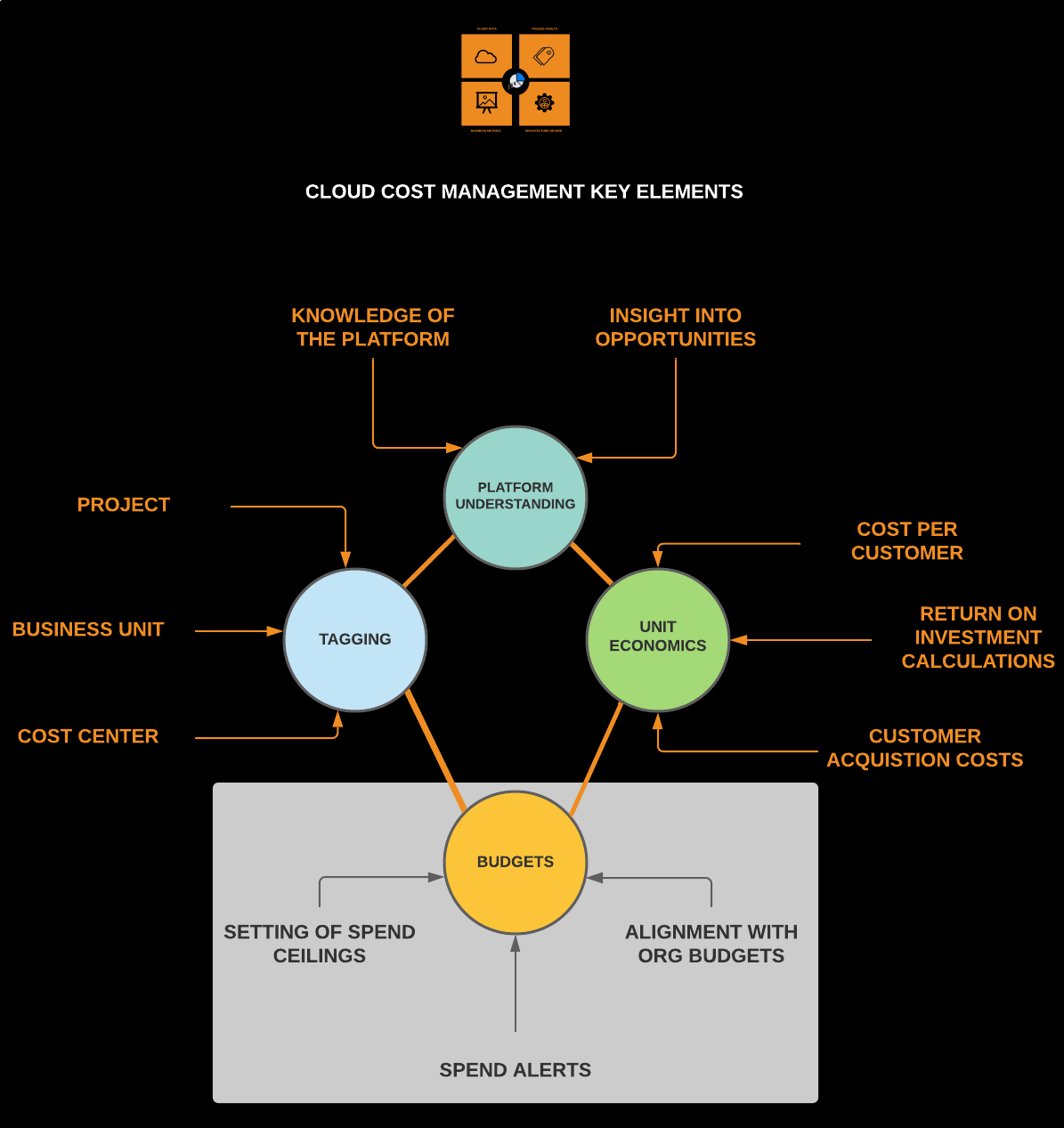
Many organizations confuse the two, thinking that cost reduction is the only goal of cloud cost management. As the graphic to the left shows, there are four key elements which combine to create the right environment for effectively managing your costs:

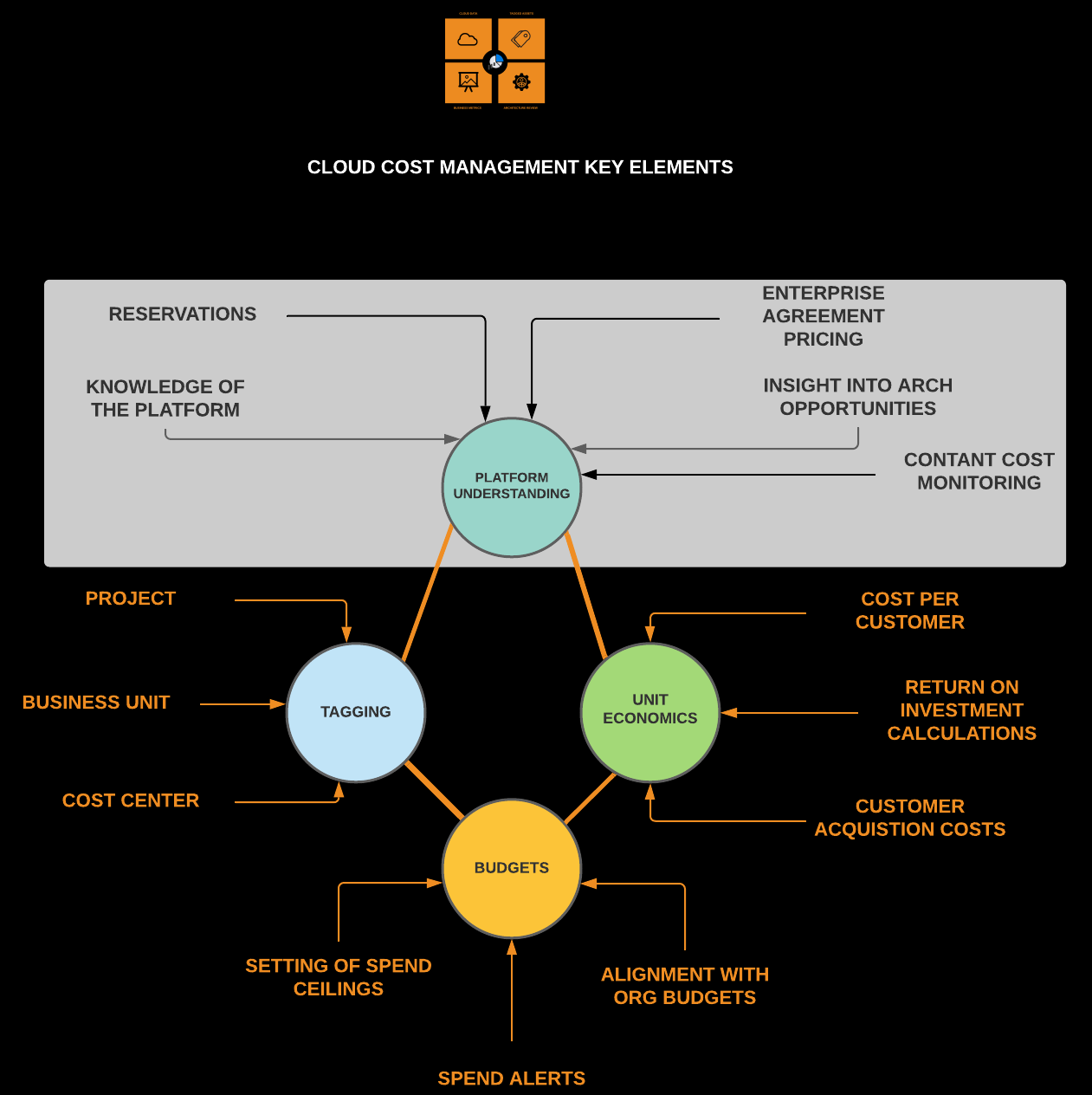
  • Platform Understanding - knowing what’s possible and how to make the best architectural choices

  • Budget Alignment - Making sure your Azure spending and goals are in alignment with your overall business targets for budget and revenue.

  • Tagging - identifying your Azure resources by business purpose and not technical metrics alone

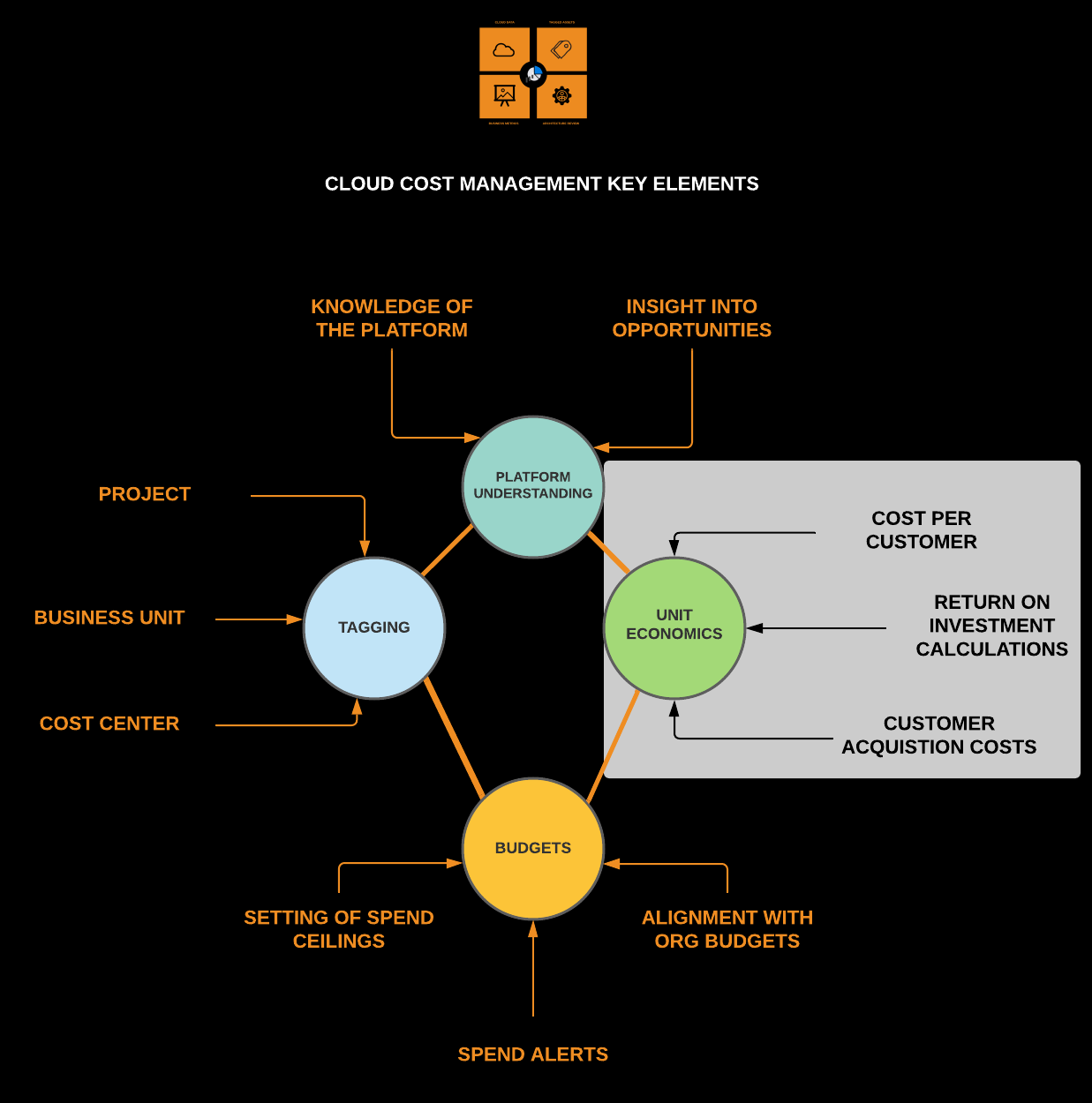
  • Unit Economics - Understanding how (or if) your cloud investment is performing relative to business goals such as revenue and budget
Cloud Cost Management Key Elements - Platform Knowledge-2.png
 

PLATFORM KNOWLEDGE

To know how to save money, and spend more intelligently, it’s key that you have a solid understanding of what’s possible (and not) on your cloud platform. Should you choose one solution or offering over another? Knowledge of what the platform brings as possibilities is critical. This is what we bring to you.

Cloud Cost Management Key Elements - Budgets.png
 

BUDGET ALIGNMENT

Traditionally, IT budgets have been viewed as a static cost center, not tied to business budget goals. Once technology was purchased and installed in a data center, it became a depreciating asset. With cloud technology, it’s possible to use platform spending data in near real-time to make adjustments and ensure spending stays within necessary limits.

Cloud Cost Management Key Elements - Tagging.png
 

TAGGING

Tagging is one of the most powerful capabilities of a cloud platform. By tagging resources using business-focused values (such as project, cost center and business unit) it’s possible to create a dynamic picture of what your technology investment is for.


UNIT ECONOMICS

Your organization moved to the cloud to increase speed and profitability. A critical question is: how is your investment performing relative to its cost.

Consider, for example, the runtime cost of a customer portal built on Azure; this should be analyzed relative to the revenue generated by the portal (perhaps to order goods or services).

We’ll help you sort through your cloud spending and business performance data to determine how (and if) your Azure usage is performing.